
News
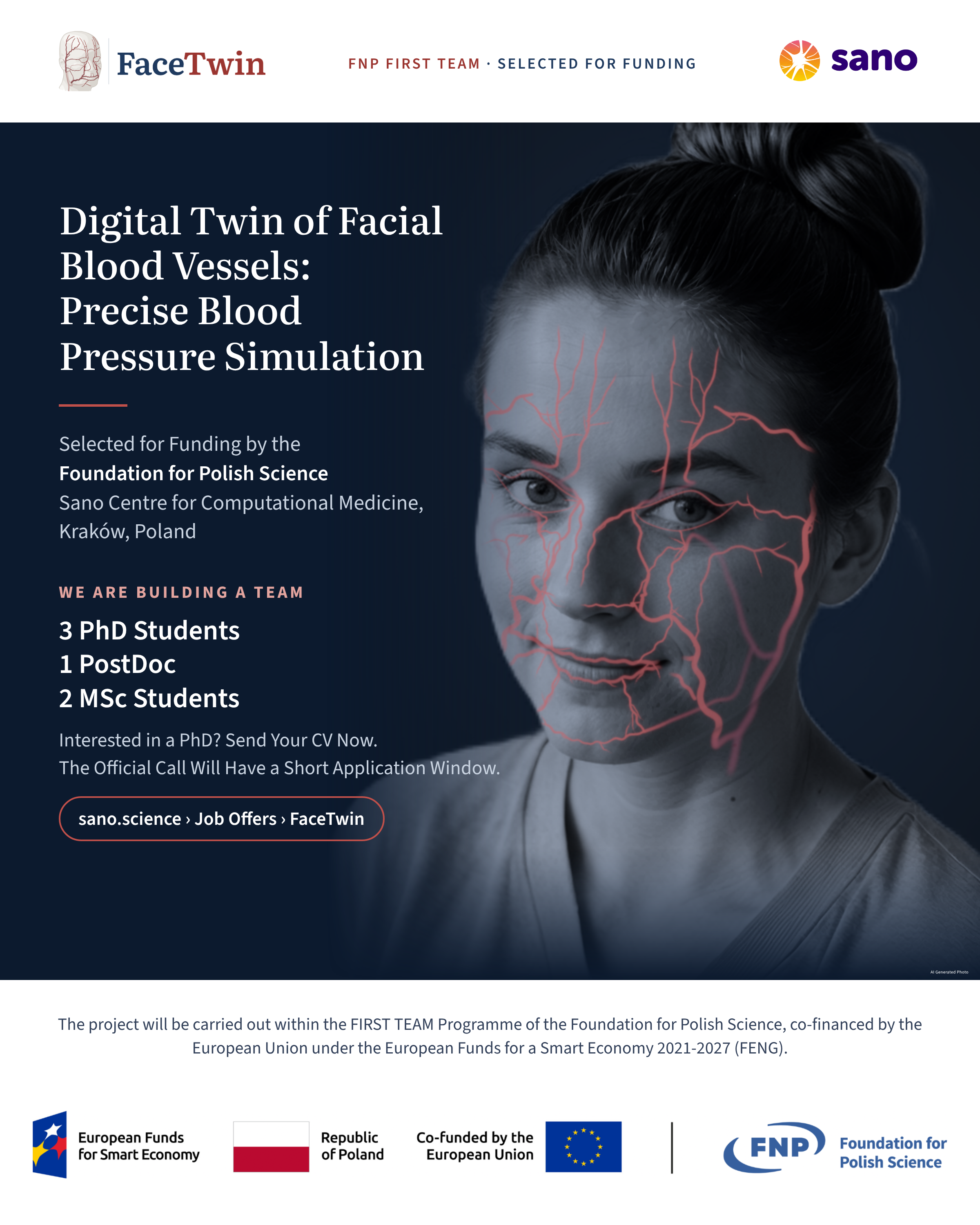
26.10.2026 - FaceTwin is Building a Team!
👥 Following the FIRST TEAM grant award, the FaceTwin project is now building its team! We are looking to create positions for 3 PhD Students, 1 PostDoc, and 2 MSc Students, working at the intersection of medical image analysis, deep learning, computer vision, and computational fluid dynamics.
This is not the official recruitment yet. However, if you are considering a PhD with us, you can already express your interest and submit your CV - official applications will need to go through the formal open call once announced, and the application window will be fairly short, so it is worth getting in touch early. Please submit only through the official Sano portal: FaceTwin job offer.
Please share with anyone who might be interested!
The project is carried out within the FIRST TEAM Programme of the Foundation for Polish Science, co-financed by the European Union under the European Funds for a Smart Economy 2021-2027 (FENG).
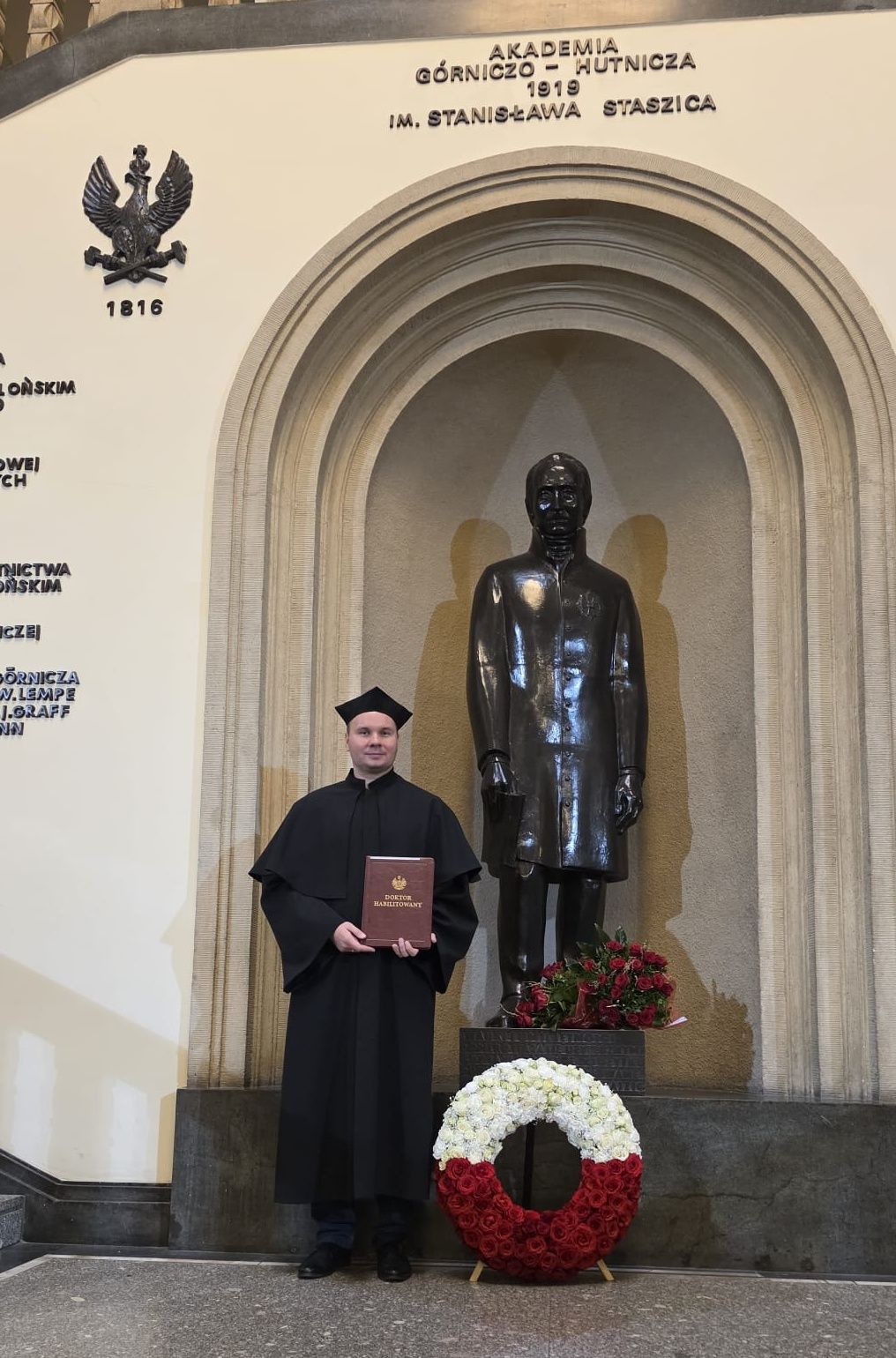
14.10.2026 - Habilitation Awarded at AGH University of Krakow!
🎓 I am happy to share that I have officially obtained my habilitation (Doctor of Habilitation) at the AGH University of Krakow - the official confirmation of scientific independence in the Polish academic system.
In Poland, habilitation is the degree that follows the PhD and unlocks the right to supervise PhD students and apply for an associate professorship. It didn’t take too long after my PhD, but it was certainly an intense journey.
A huge thank you to everyone who supported me along the way!
P.S. If you are considering a PhD in Poland, stay tuned - we will soon have open (and competitive) positions available.
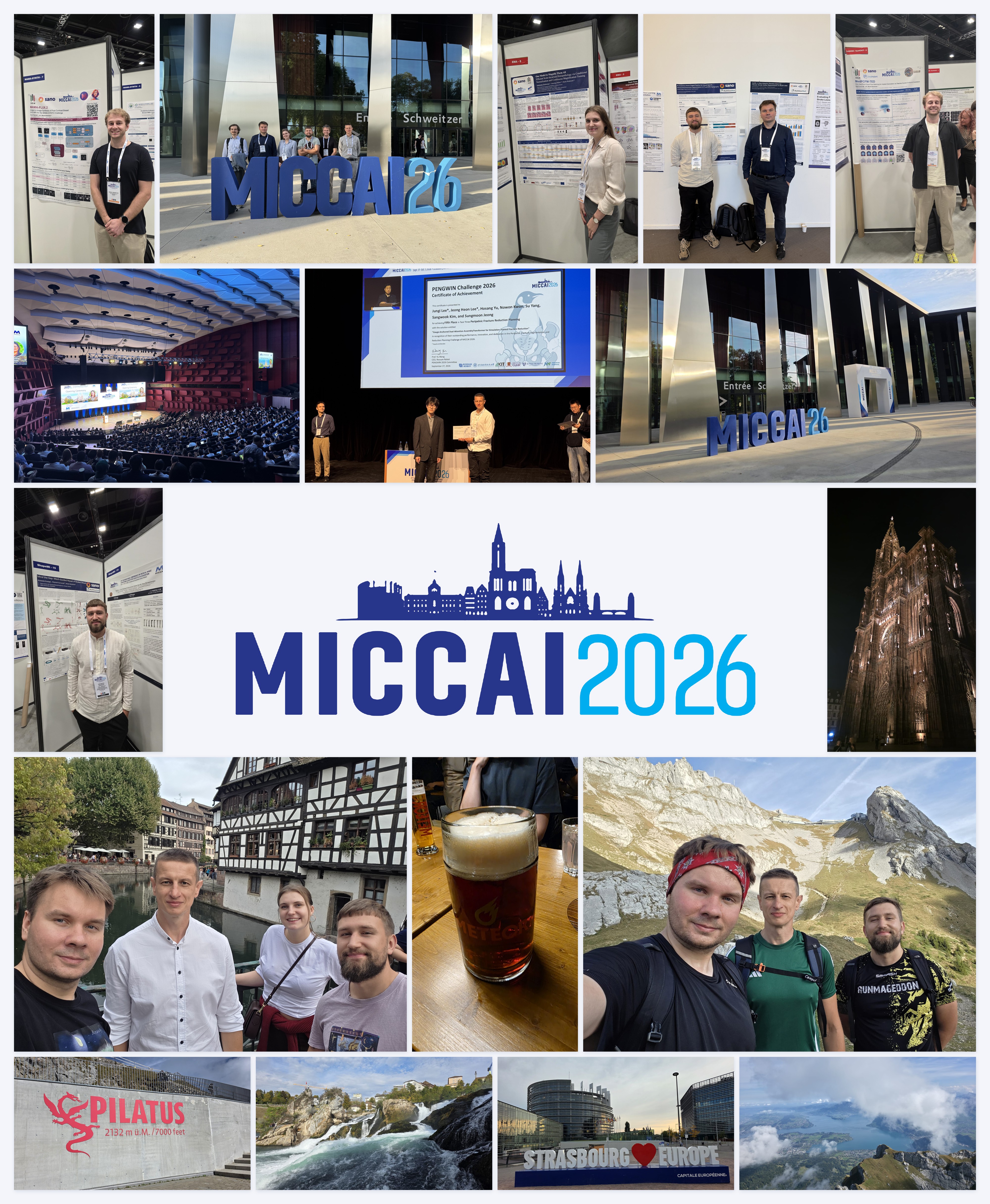
02.10.2026 - Sano & AGH at MICCAI 2026!
🎉 We had a fantastic time at MICCAI 2026, held in Strasbourg, France!
The Sano Medical Image Analysis team, together with colleagues from the AGH University of Krakow, published 6 workshop papers and took part in 4 international challenges: ISLES 2026, PENGWIN 2026, TopBrain 2026, and TopAneu 2026.
We were actively present at several satellite events: SWITCH+, ShapeMI, EMA4MICCAI, and DeepBreath, and we are proud to share that we received 2x Best Poster Award - at ShapeMI and at SWITCH+!
A huge thank you to the entire team for the hard work throughout the year, and to the organizers and fellow participants for making this edition of MICCAI such a memorable one. Looking forward to next year!
18.09.2026 - FNP FIRST TEAM Grant Awarded!
🏆 I am delighted to share that I have been awarded a FIRST TEAM grant by the Foundation for Polish Science (FNP)!
The project, acronym FaceTwin, titled “Digital Twin of the Facial Vasculature for Accurate Blood Pressure Simulation”, will run from 01.01.2027 to 31.12.2029, with funding close to 4 million PLN. The project will be realized at Sano Science.
The goal of FaceTwin is to build a patient-specific digital twin of the facial vascular network, enabling accurate, non-invasive blood pressure simulation directly from facial imaging data.
We will soon be looking for new PhD students and a PostDoc to join the team - stay tuned!
23.07.2026 - TopCoW Challenge Paper Published in NEJM AI
Our contribution to the TopCoW Challenge has been published in NEJM AI!
The article establishes the first public benchmark and paired CT angiography-MR angiography dataset for topology-aware anatomical segmentation of the Circle of Willis, bringing together a large international consortium to advance automated vascular anatomy analysis for stroke risk assessment and neurovascular research.
See more: NEJM AI
17.07.2026 - IEEE Computer Society 2025 Best Paper Award!
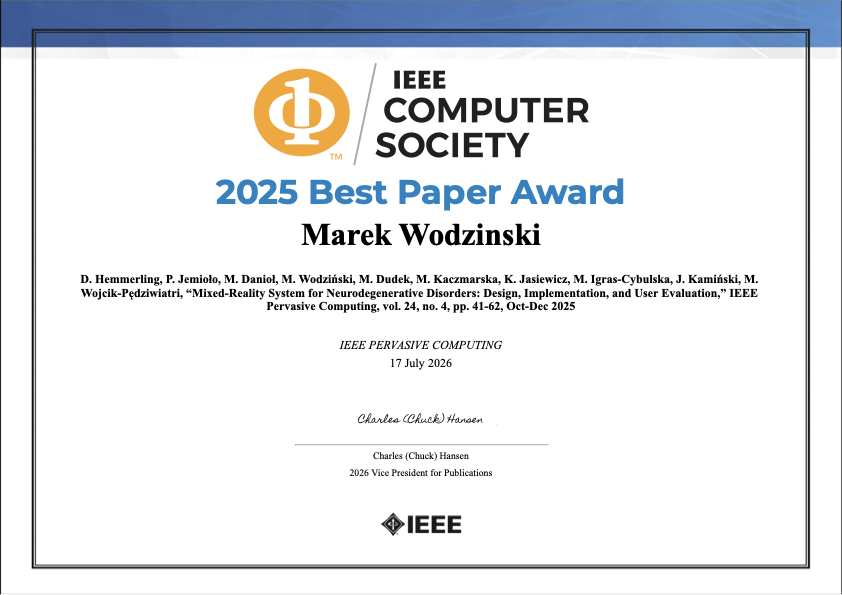
🏆 Thrilled to share that our article “Mixed-Reality System for Neurodegenerative Disorders: Design, Implementation, and User Evaluation” (D. Hemmerling, P. Jemioło, M. Danioł, M. Wodziński, M. Dudek, M. Kaczmarska, K. Jasiewicz, M. Igras-Cybulska, J. Kamiński, M. Wojcik-Pędziwiatri, IEEE Pervasive Computing, vol. 24, no. 4, pp. 41-62, Oct-Dec 2025) has received the 2025 Best Paper Award from the IEEE Computer Society!
The paper presents a mixed-reality, sensor-based system for assessing motor and cognitive symptoms in neurodegenerative disorders. It’s a great honor to see this work recognized, and a huge thank you to all my co-authors and collaborators, especially Daria Hemmerling!
See more: Publication
01.06.2026 - Associate Professor at AGH and new role at Sano Science!
🎓 I am thrilled to share two important next steps in my career!
I have been promoted to Associate Professor at the AGH University of Krakow - a milestone that means a lot to me and motivates me to keep pushing the boundaries of medical image analysis and deep learning, both in research and in teaching. Importantly, this promotion also allows me to directly supervise PhD students - I am very much looking forward to working closely with the next generation of researchers in medical AI.
At the same time, I am taking on a new role at Sano Science, where I will lead the Medical Imaging & Robotics team as its Team Leader. I am very excited about this opportunity to grow a vibrant research group at the intersection of AI, medical imaging, and robotics, and to keep building strong international collaborations.
A huge thank you to everyone who has supported me along the way - colleagues, collaborators, students, mentors, and family. Looking forward to what comes next! 🚀


27.04.2026 - Active participation in IEEE MeAVeAS 2026!
I had the pleasure of actively participating in the 2026 IEEE International Workshop On Measurements and Applications in Veterinary and Animal Sciences (IEEE MeAVeAS 2026) in Padua, Italy.
I gave an oral presentation entitled “Benchmarking Deep Architectures for Automated VLAS Measurement in Canine Lateral Thoracic Radiographs”, presenting our contribution to accelerate the VLAS measurement with the help of deep neural networks. In addition, I had the honor of taking part as a round-table speaker, joining a discussion on the current state and future directions of AI in veterinary and animal sciences.
It was a great opportunity to exchange ideas with researchers and practitioners working at the intersection of AI and veterinary medicine, and to see how rapidly this field is evolving.
25.04.2026 - New article accepted in European Journal of Radiology!
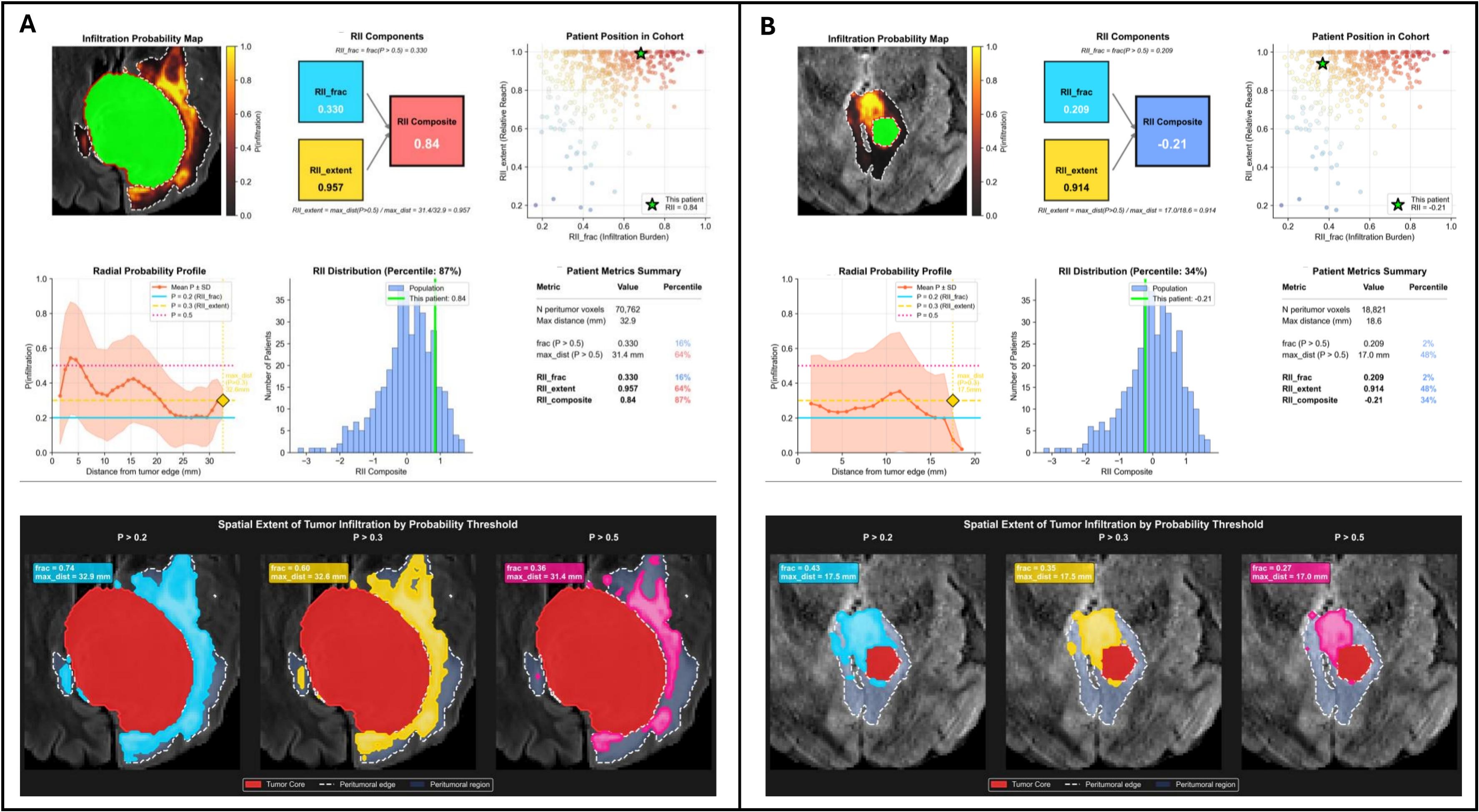
We are happy to announce that our latest article: “Radiomics-based mapping of glioblastoma infiltration beyond contrast enhancement: diffusion–perfusion correlations and survival analysis in large public cohorts” has been accepted for publication in the European Journal of Radiology.
The work proposes a radiomics-based pipeline to map glioblastoma infiltration beyond regions of contrast enhancement, leveraging diffusion–perfusion MRI correlations and validating the approach with survival analysis on large public cohorts. The findings provide an important step toward AI-supported delineation of tumor infiltration that can directly inform surgical and radiotherapy planning.
See more: European Journal of Radiology
23.04.2026 - ToothFairy2 Challenge Article Published in Medical Image Analysis
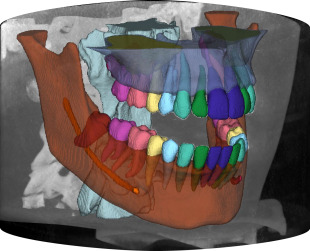
The article summarizing the outcomes of the ToothFairy2 challenge - “Multi-structure segmentation in CBCT volumes: The ToothFairy2 challenge” - has been published in Medical Image Analysis!
Following the success of the first edition, ToothFairy2 extended the scope from the Inferior Alveolar Canal to multi-structure segmentation of dental and maxillofacial anatomy in CBCT volumes. The publication summarizes the participating methods, establishes a new public benchmark, and outlines the remaining challenges in CBCT-based dental image analysis. It is a great example of how community-driven challenges keep pushing the state of the art in medical image analysis forward.
See more: Medical Image Analysis
20.04.2026 - SupraGlio Article Published in Neuro-Oncology
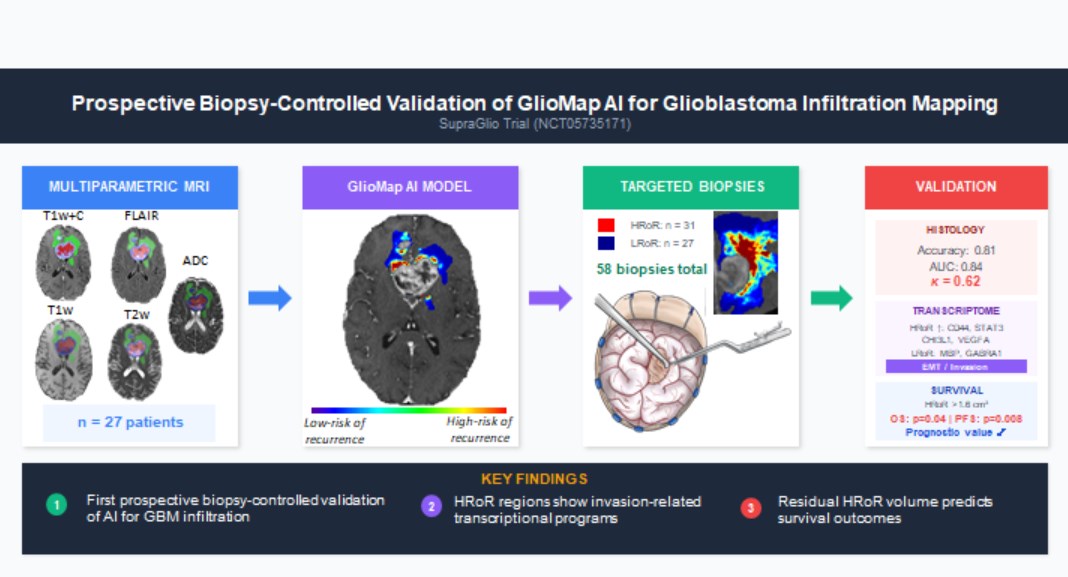
Our article: “Prospective biopsy-controlled validation of an AI model for predicting glioblastoma infiltration: Results from the SupraGlio trial” has been accepted and published in Neuro-Oncology!
The SupraGlio trial provides a prospective, biopsy-controlled validation of an AI model designed to predict glioblastoma infiltration beyond the contrast-enhancing tumor region. By correlating model predictions with histopathological findings from targeted biopsies, the study confirms the clinical relevance of AI-based infiltration mapping and represents an important step toward translating these methods into neurosurgical and oncological practice.
See more: Neuro-Oncology
19.01.2026 - New article in Veterinary Quarterly!
Our article: “Development of an artificial intelligence-based algorithm for the detection of left atrial enlargement from feline thoracic radiographs” has been published in Veterinary Quarterly!
The study presents an AI-based algorithm trained to automatically detect left atrial enlargement in cats from thoracic radiographs, achieving particularly strong performance for more advanced disease. The work is another step toward AI-supported veterinary cardiology, where reliable, automated screening tools can directly assist clinicians in early diagnosis.
See more: Veterinary Quarterly
16.12.2025 - New article in Scientific Reports!
Our article: “Radiomics-based quantification of tumor infiltration in the non-enhancing peritumoral region on postoperative MRI is associated with survival in glioblastoma” has been published in Scientific Reports!
The study shows that radiomics-based machine learning models can quantify tumor infiltration within the non-enhancing peritumoral region on postoperative MRI, and that this quantification is associated with patient survival - providing an independent prognostic factor in glioblastoma. The findings highlight the value of looking beyond contrast-enhancing tumor for clinically meaningful imaging biomarkers.
See more: Scientific Reports
19.10.2025 - Polityka Scientific Award!
🏆 Thrilled to share some exciting news! I’ve been awarded the 25th POLITYKA Scientific Award in the category of Technical Sciences 🎓
This recognition honors my research in automatic medical image analysis, with a special focus on the automatic design of personalized bone implants. It’s incredibly rewarding to see how AI-driven solutions can support personalized medicine and improve patient outcomes.
💡 This award is also a powerful motivation to continue our work - both at AGH University of Krakow and at Sano Centre for Computational Medicine - where our research teams are developing innovative applications of artificial intelligence in medicine. I’m proud to be part of these vibrant communities pushing the boundaries of digital health.
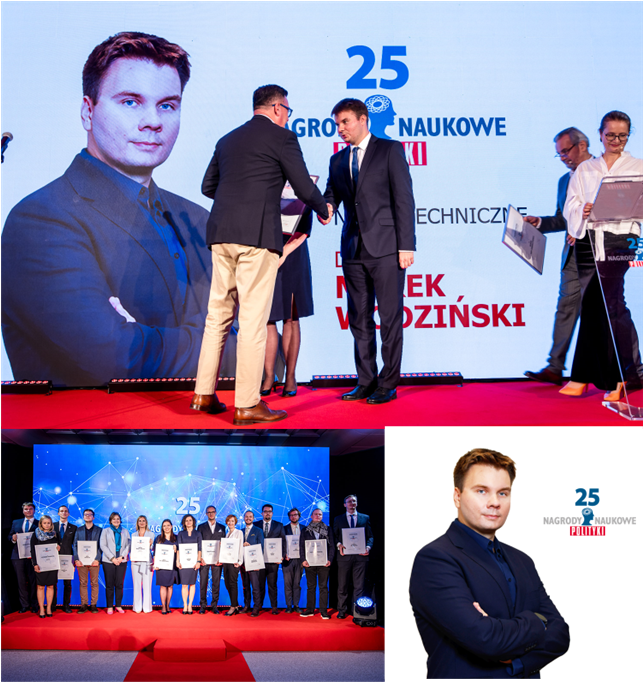
📸 Photo by: Teodor Klepczyński/Leszek Zych/POLITYKA
01.10.2025 - MultiGeoMed Project Started!
The research project: “Multimodal Geometric Deep Learning in Medical Image Analysis” has officially started! It is hosted at the Sano Research Centre.
The project is devoted to develop methods dedicated to multimodal geometric deep learning, aiming at processing different geometric representations simultenously - to improve several different downstream tasks in medical imaging. It is funded by the National Research Centre under the Sonata 20 programme.
29.09.2025 - New article in Veterinary Quarterly!
We’re excited to announce the publication of our latest research: “Automated Segmentation of Canine Pulmonary Masses in CT Imaging Using AI”. This multicenter study introduces a robust AI model trained on 217 canine CT scans to automatically segment pulmonary masses. The model performed especially well on well-defined lesions, offering a promising tool to support veterinary diagnostics and treatment planning.
13.08.2025 - Veterinary xAI Article in Scientific Reports
An interesting study related to xAI was accepted and published in Scientific Reports.
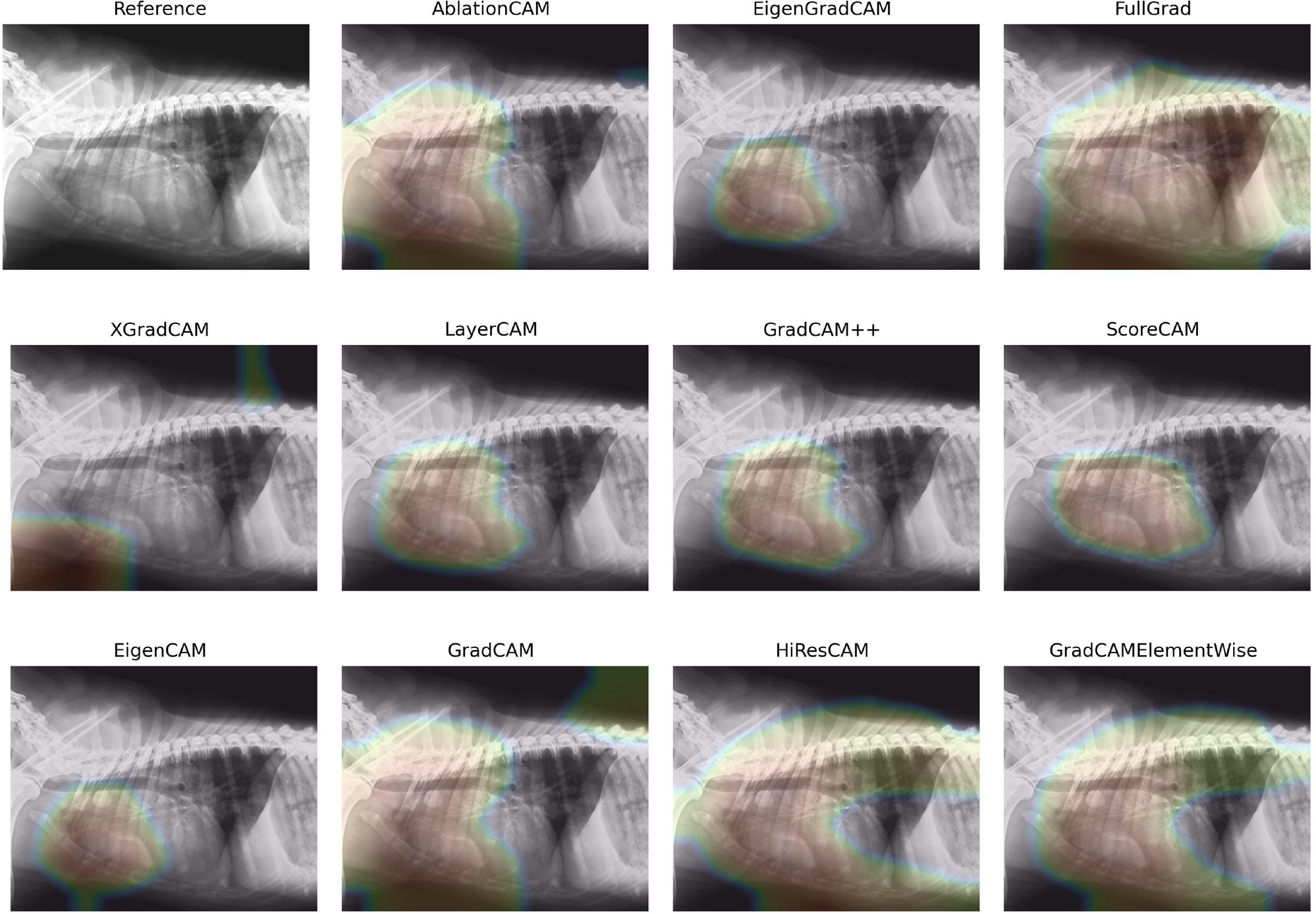
This study offers a comprehensive evaluation of Class Activation Mapping (CAM) techniques—including GradCAM, EigenCAM, and ScoreCAM—on over 7,000 canine and feline X-ray images to assess their interpretability in veterinary diagnostics. While EigenGradCAM emerged as the top performer, the findings reveal that no CAM method consistently enhanced veterinarians’ diagnostic confidence, highlighting the ongoing challenge of explainability in AI-assisted radiography. It confirms that other xAI methods are required to build the confidence of veterinary doctors to use AI solutions.
16.07.2025 - DeepImplant Article Published
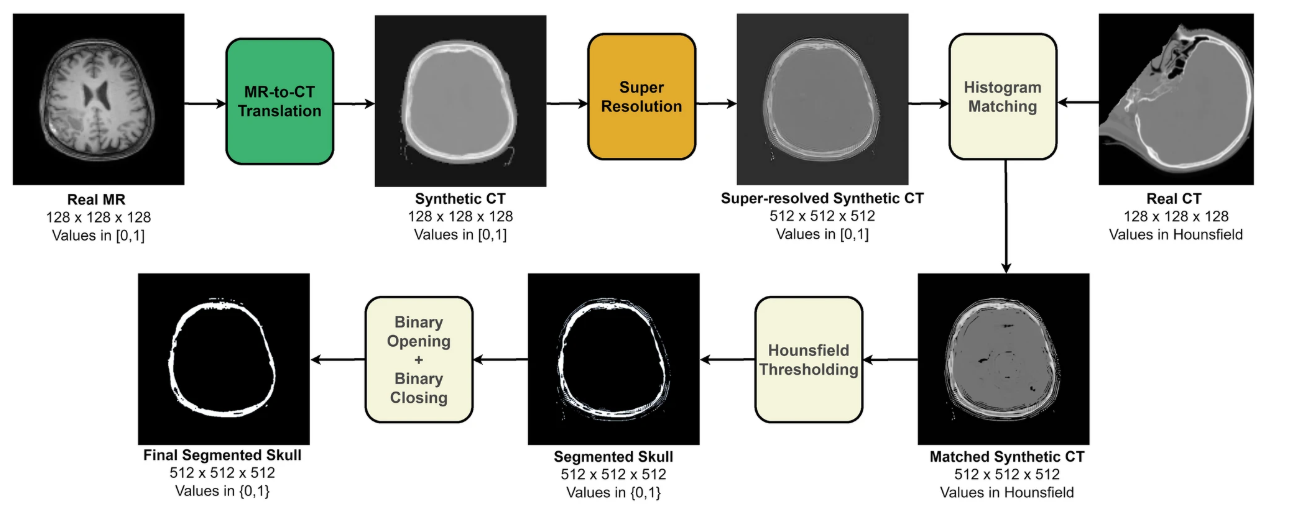
Our publication related to the automatic skull segmentation has been published in Scientific Reports!
This publication presents our approach to automatic skull segmentation from magnetic resonance (MR) volumes without relying on ground-truth annotations. We demonstrate that unsupervised modality transfer from computed tomography (CT) to MR volumes is feasible. When combined with super-pixel scaling and histogram matching, this enables the training of a segmentation network entirely without supervision. This approach is particularly valuable for out-of-distribution cases, such as damaged skulls requiring cranial reconstruction. Our results represent a significant step toward the practical application of our cranial reconstruction methods.
27.05.2025 - NCN Sonata Granted!
I am happy to share that my grant proposal entitled “Multimodal Geometric Deep Learning in Medical Image Analysis” has been accepted by the National Science Centre in Poland!
In the project we will explore how different geometrical representations can be used simultaneously to improve numerous downstream tasks in medical image analysis.
The project will be realized in cooperation with the international Sano Science. Soon I will announce open positions for PhD student and PostDoc, stay tuned!
17.04.2025 - 1st place in the FuseMyCells challenge
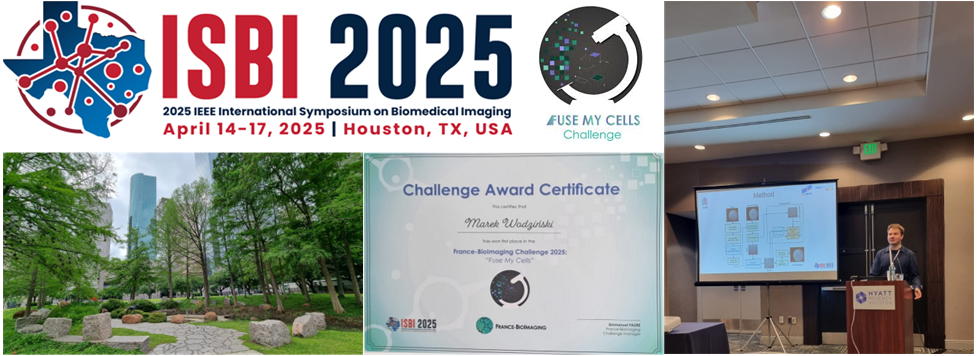
I am thrilled to announce another success! My contribution has secured 1st place in the FuseMyCells challenge at the IEEE ISBI 2025 conference in Houston, Texas! 🎉
The goal of the challenge was to develop an automatic solution to fuse multiview 3-D lightsheet microscopy volumes from a single acquisition angle – significantly increasing imaging speed, reducing costs, and optimizing the photon budget.
A huge thanks to the challenge organizers and all the participants for making this event a memorable and inspiring experience!
21.03.2025 - Success at the InnoDiament competition
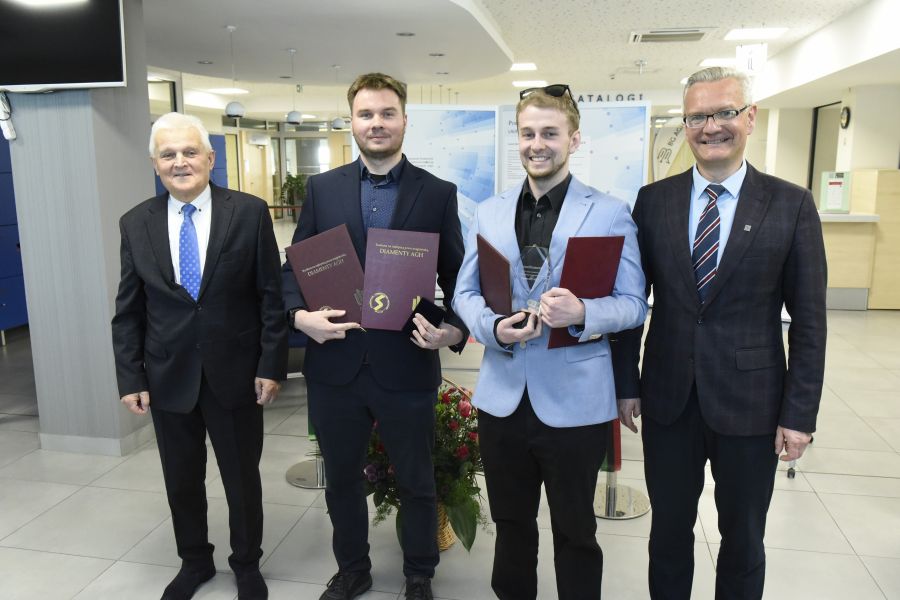
The Master Thesis authored by Kamil Kwarciak has been honored with the prestigious InnoDiament Award! 🏆 This award is given to a single, carefully selected thesis at AGH University of Kraków for its outstanding practical potential - and I had the pleasure to be the supervisor!
Kamil’s thesis, titled “Unsupervised Segmentation of Defective Skulls in Volumetric Data Using Deep Networks Dedicated to Modality Transfer” delves into the innovative approach of automatic skull segmentation from magnetic resonance volumes. By applying unsupervised modality transfer to computed tomography, the thesis demonstrates how skulls can be directly segmented using simple thresholding techniques, without using any ground-truth annotations. This amazing work was part of the DeepImplant project, funded by NCBR.
Adding to this achievement, the thesis also secured 3rd place in the Diamenty AGH competition! 🥉
26.02.2025 - DiagNeuro article published in Biomedical Signal Processing and Control
Our most recent article related to the DiagNeuro project has been published in Elsevier Biomedical Signal Processing and Control.
The article presents the outcomes of gait analysis for automatic Parkinson’s disease assessment using signals collected from mixed reality devices. We show that it is possible to perform early Parkinson’s disease diagnosis using general purpose equipment, without specialized and dedicated hardware.
See more: Biomedical Signal Processing and Control
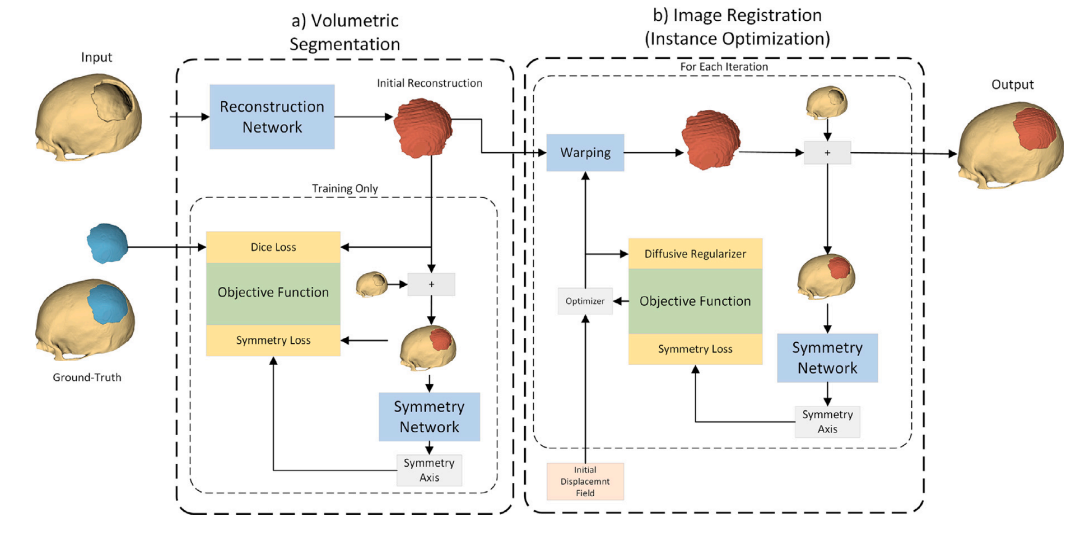
20.02.2025 - Article about learnable symmetry enforcement published in Computer Methods and Programs in Biomedicine
Our article related to improving the automatic skull reconstruction has been published in Computer Methods and Programs in Biomedicine!
The article describes a method dedicated to enforce skull symmetry during the automatic reconstruction by deep learning methods. It shows that the dedicated Symmetry Loss can be used both during training and inference to improve the reconstruction outcomes, especially for out-of-distribution cases.
See more: Computer Methods and Programs in Biomedicine
30.12.2024 - Article about brain metastases published in Scientific Reports
The article related to the automatic detection and multi-component segmentation of brain metastases has been accepted and published in Scientific Reports.
The article describes the outcomes of our research on the automated detection and segmentation of brain metastases in longitudinal MRI scans. Our method addresses the challenges of identifying and segmenting new lesions for screening and treatment planning with high accuracy. This work significantly improves the precision and reliability of brain metastases segmentation.
See more: Scientific Reports
25.12.2024 - ToothFairy Challenge Article Published
The article related to the ToothFairy challenge has been published in the IEEE Transactions on Medical Imaging!
The article described the outcomes of the 1st edition of the ToothFairy challenge devoted to the automatic segmentation of the Inferior Alveolar Canal in CBCT volumes, addressing the challenges of voxel-level segmentation with high accuracy. Our method scored the 3rd place during the challenge.
See more: ToothFairy Challenge
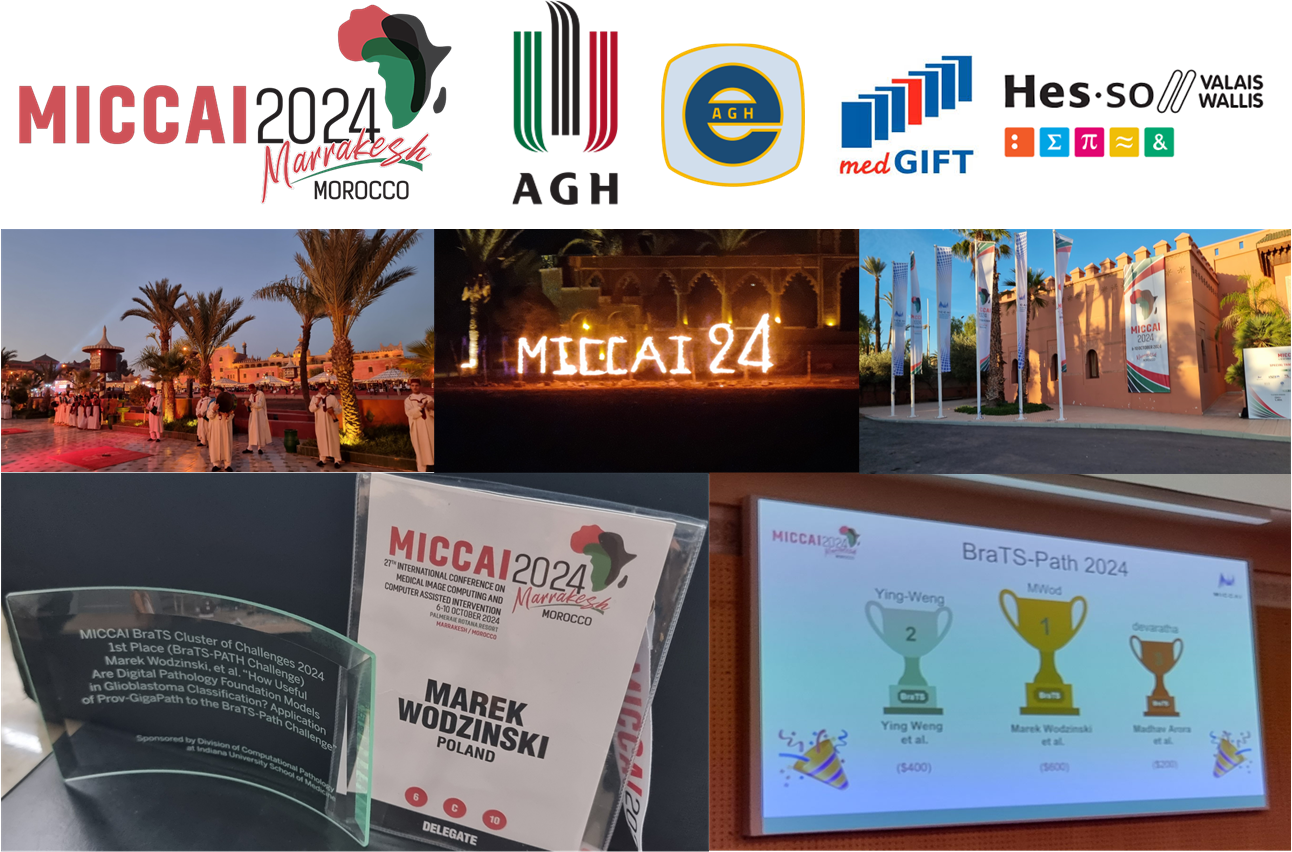
10.10.2024 - 1st place in the BraTS-Path Challenge
Our contribution to the BraTS-Path challenge organized during the MICCAI 2024 conference scored the 1st place!
We proposed a contribution based on a digital pathology foundation model (ProvGigaPath) to handle the challenges related to low heterogeneity of the training set and the requirement to generalize into previously unseen samples from different distribution. Our contribution significantly outperformed all other contributions based on careful tuning of general-purpose computer vision models.
See more: BraTS-Path
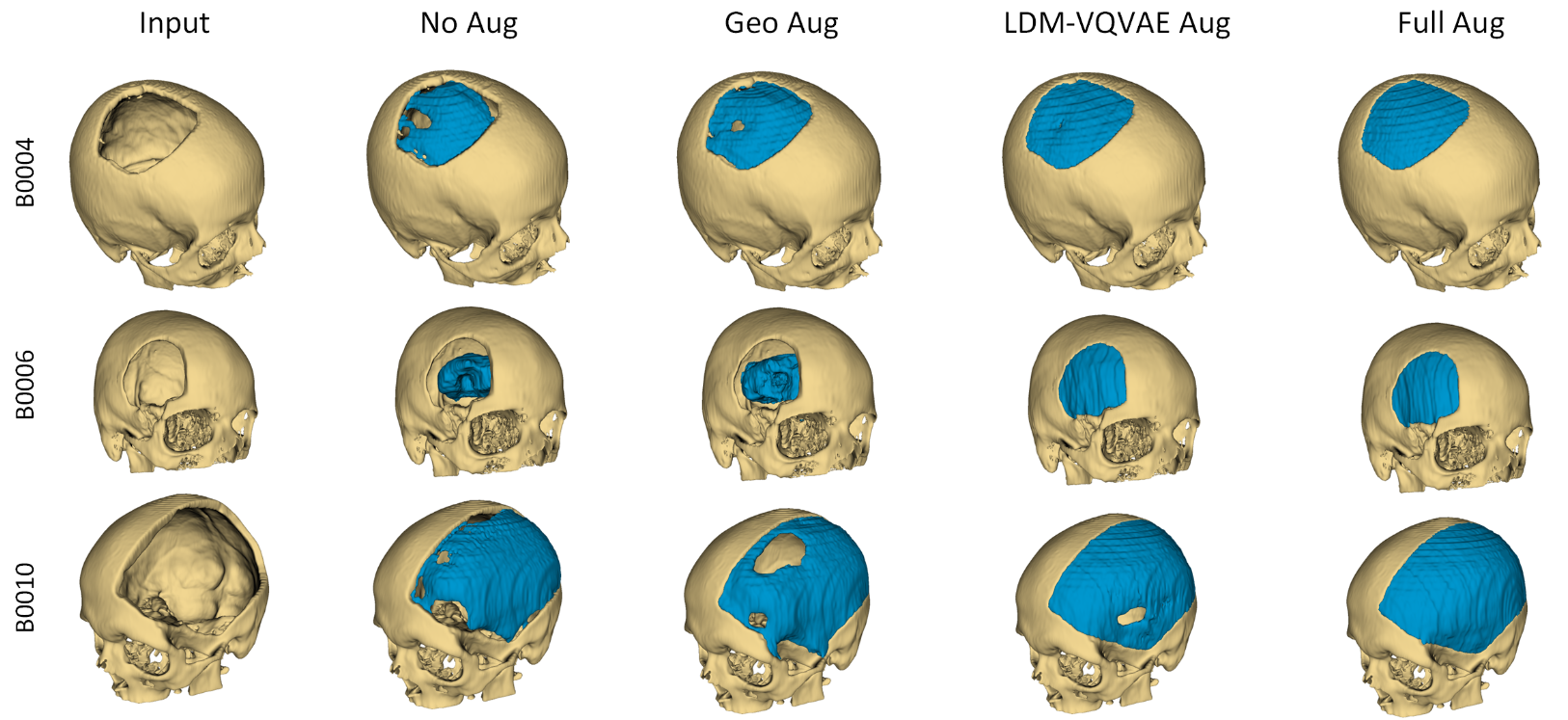
11.09.2024 - DeepImplant Article Published
Our new article connected with the DeepImplant project has been just published in Computers in Biology and Medicine. We show the great impact of strong data augmentation to generalizability of learning-based methods to improve the robustness of automatic cranial defect reconstruction.
See more: Elsevier
14.08.2024 - ExaMode Article in Medical Image Analysis
An article presenting our research about multimodal deep learning in digital pathology has been just published in Medical Image Analysis.
The contribution presents strategy to use both text reports and WSIs to improve deep learning-based methods in digital pathology. The proposed method enhances not only the quantitative results but also allows one to discover relations between visual and textual data in the latent space. The work confirms that multimodal approaches are the future of deep learning in medicine.
See more: Elsevier
04.07.2024 - Contribtion presented and published at International Conference on Computational Science
Our contribution, in collaboration with Sano Science has been recently presented and published at the International Conference on Computational Science (ICCS) conference.
The paper introduces a method dedicated to predicting the thermostability of proteins using a deep transformer model dedicated to text processing. It confirms that the advances in large language models can be easily transferred to other domains, including proteomics.
See more: Springer
01.07.2024 - ACROBAT Article in Medical Image Analysis
The article presenting the outcomes of the 1st edition of the ACROBAT Challenge (MICCAI 2022, Singapore) has been finally published in Medical Image Analysis.
The paper constitutes new state-of-the-art in the registration of whole slide images in histopathology. It presents a careful evaluation of different registration approaches and shows its importance for further downstream tasks. Noteworthy, our method scored 3rd place in the 2022 edition and 1st place in the 2023 edition.
See more: Elsevier
23.06.2024 - HaN-Seg Article Published
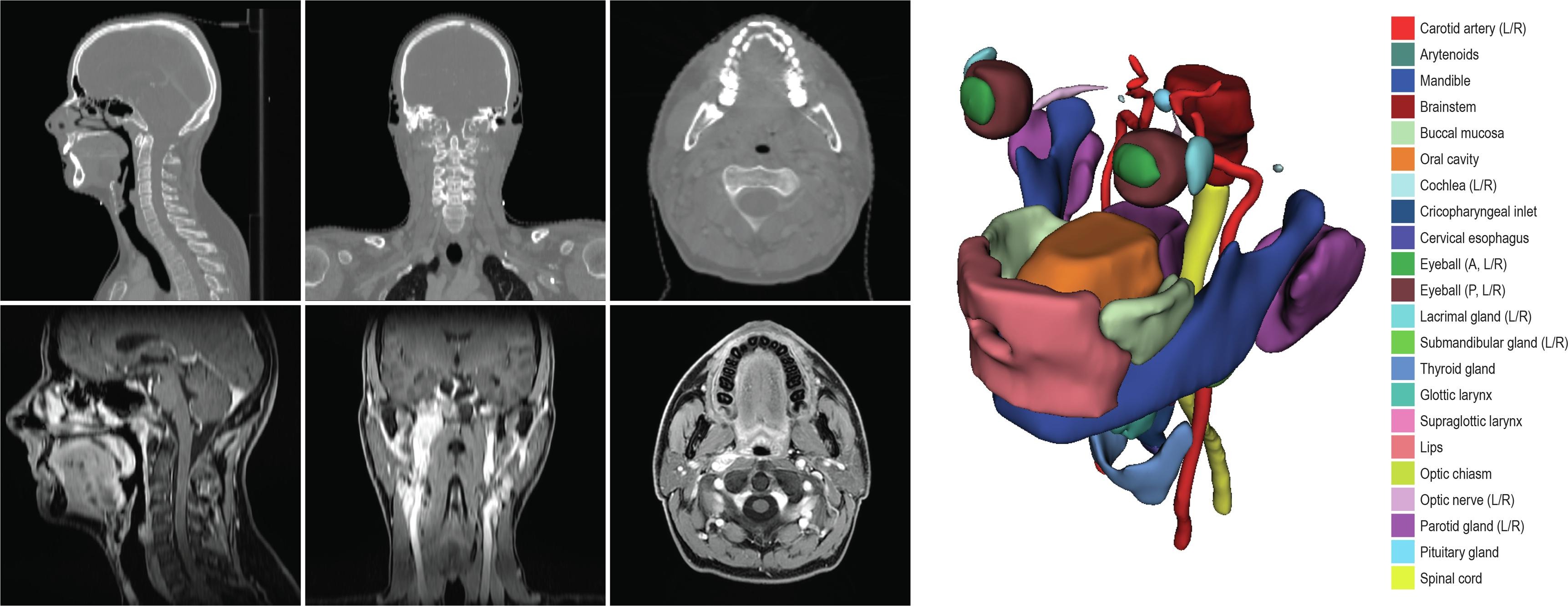
The article presenting outcomes of the HaN-Seg Challenge was accepted and published in Radiotherapy and Oncology. The paper describes the results of a challenge dedicated to multimodal segmentation of head and neck organs-at-disk from CT and MR data. It shows the current state-of-the-art and confirms that data preprocessing and training objectives are much more important in low data regimes compared to network architectures.
See more: Elsevier
20.06.2024 - Last ExaMode Article
Our last article related to the ExaMode project has been released on arXiv. The article shows that using automatically generated annotations can be as accurate as using annotations prepared by medical experts, and - as a result - decreasing the time and costs associated with the labeling process.
See more: arXiv
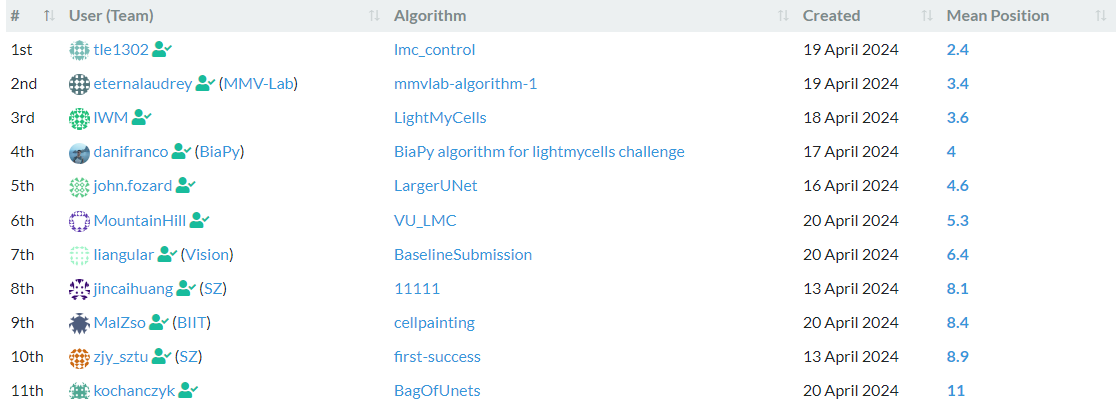
30.05.2024 - 3rd position in the LightMyCells Challenge
Our contribution to the LightMyCells challenge organized during IEEE ISBI conference in Athens, Greece scored the 3rd place!
See more: LightMyCells
26.04.2024 - RegWSI Published in Computer Methods and Programs in Biomedicine
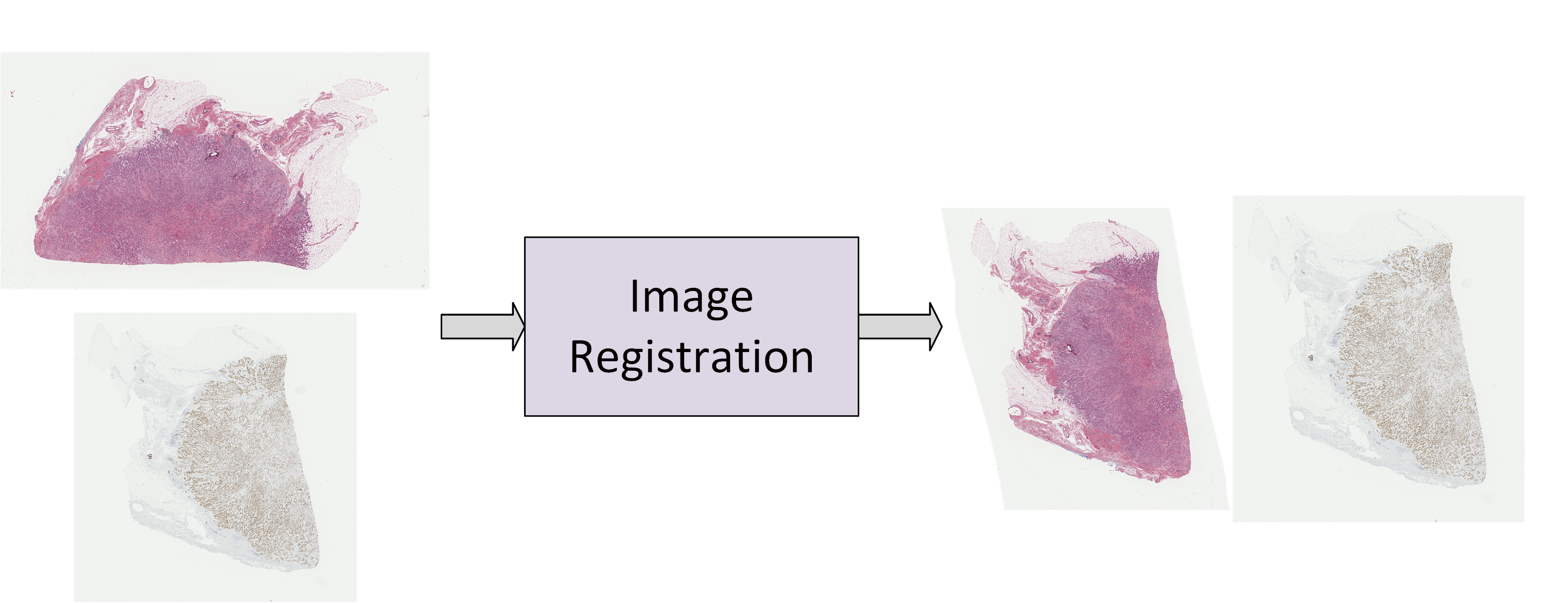
Our publication describing robust and accurate method dedicated to WSI registration is available online: CMPB
The article presents the method that won the ACROBAT 2023 challenge. The source code is openly available: GitHub
15.04.2024 - Two papers accepted at EMBC 2024
Two contributions from our research group at AGH were accepted for oral presentation and publication during this year EMBC in Florida.

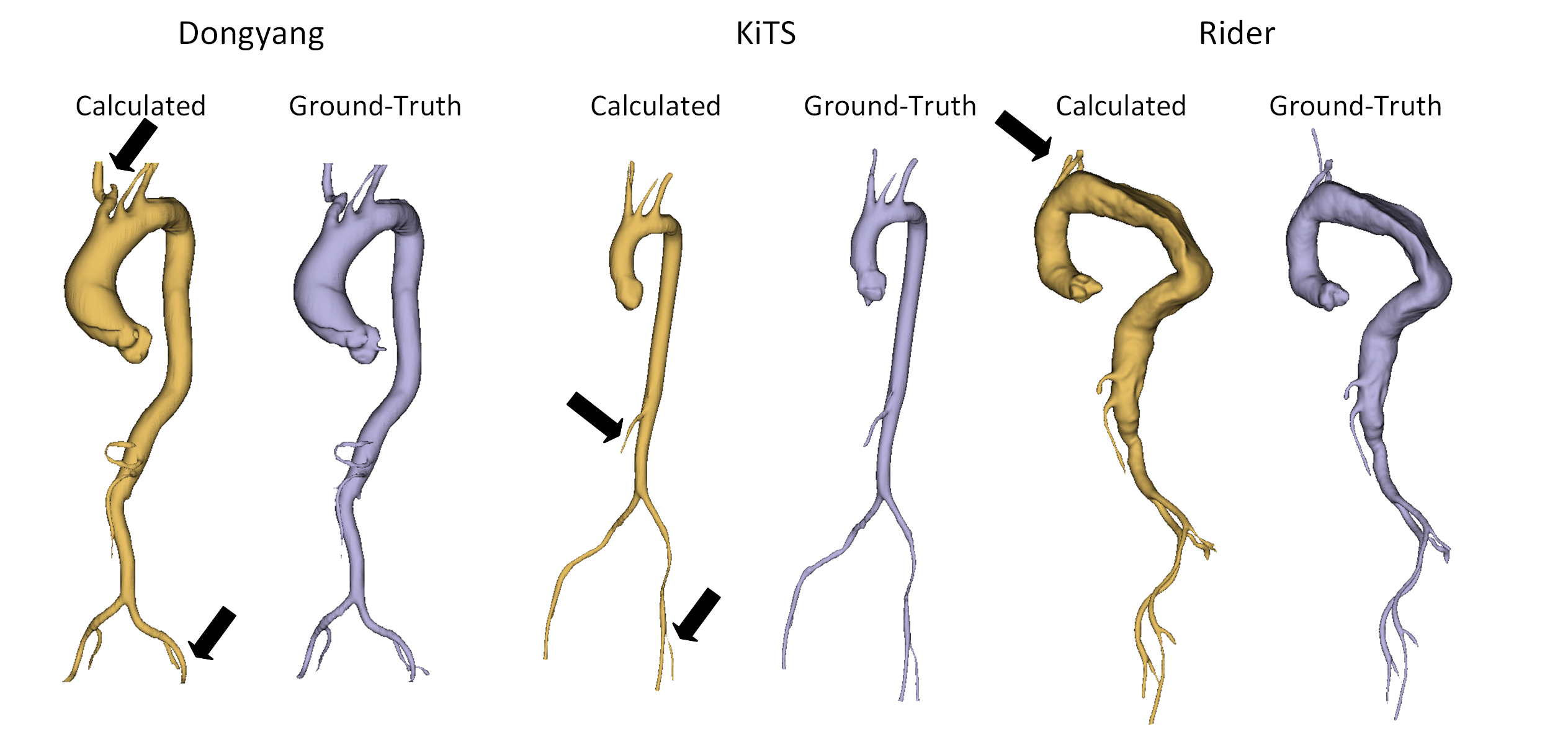
10.02.2024 - The contribution to the SEG.A Challenge published by Springer
Our article presenting the contribution to the SEG.A challenge was published by Springer. The article presents the method that scored the 1st place in the clinical evaluation.
09.11.2023 - Inter-species self-supevised pretraining published in Scientfific Reports
The article presenting the concept of using self-supervision to transfer knowledge from large datasets into low data regime has been published in Scientific Reports.
The work presents that it is possible to perform large-scale self-supervised training on human data and then transfer the knowledge to veterinary imaging.
15.10.2023 - Success at the MICCAI 2023 conference!
I am happy to share the recent success during the MICCAI 2023 conference!
Our contributions won the ACROBAT 2023 challenge, scored 1st place in the SEG.A Challenge clinical evaluation, and 3rd position in the ToothFairy competition. We are looking forward to the next years competitions and the lighthouse challenges in 2025.

29.07.2023 - Article accepted at CVPR LIMIT Workshop
Our article presenting the preliminary work related to the influence of generetive augmentation on automatic cranial defect reconstruction was accepted to by presented during the CVPR 2023 LIMIT Workshop.
17.07.2023 - BraTS-Reg Contribution published by Springer
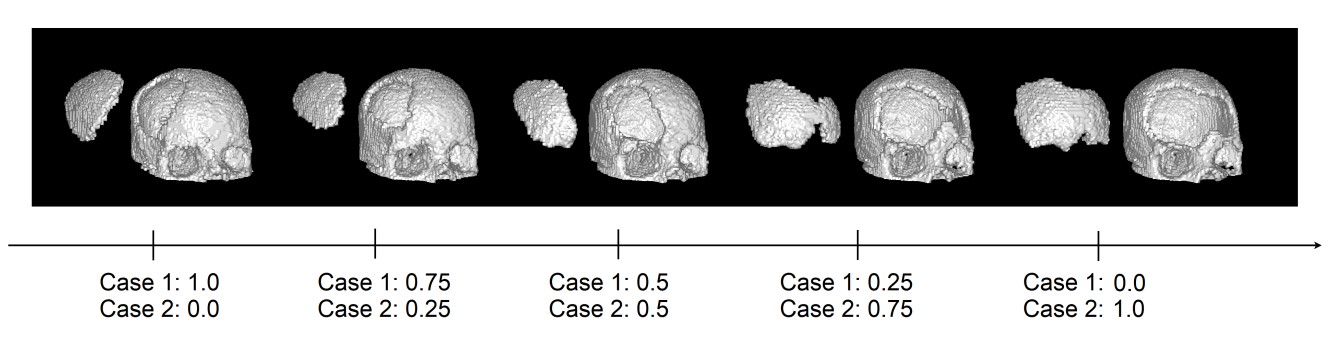
The contribution to the BraTS-Reg Challenge has been finally published by Springer. The article presents the method that scored the 1st place during the ISBI 2022 edition and 3rd place in the MICCAI 2022 competition.
09.06.2023 - AutoImplant Challenge publication published in Medical Image Analysis
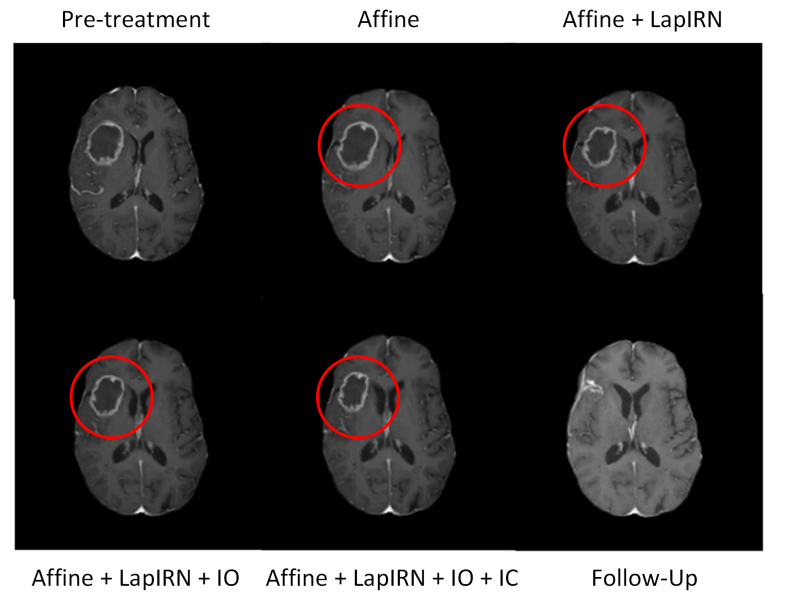
The challenge publication presenting the outcomes of the AutoImplant challenge has been finally published in Medical Image Analysis. Our contribution has scored the 1st place in all tasks organized during the challenge.
29.05.2023 - DeepImplant Article accepted at MICCAI 2023
The first DeepImplant article was accepted for publication at the MICCAI 2023 conference in Vancouver.
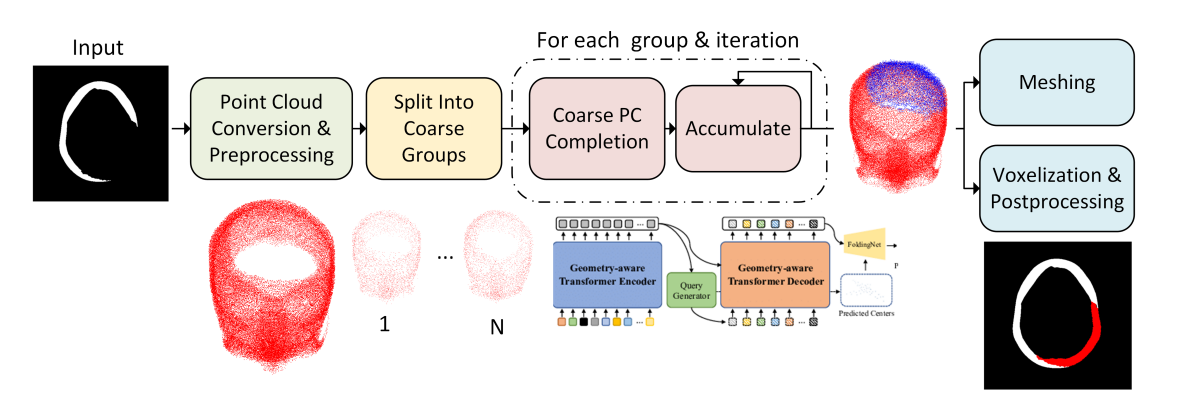
The article presents our contribution that reformulates the problem from volumetric segmentation to point cloud completion, presenting superior generalizability with low computational requirements.
18.04.2023 - Two papers accepted at EMBC 2023
Two papers were accepted for publication at the EMBC 2023 conference in Sydney.
The first article presents the contribution improving WSI quality control by explicit artifact augmentation. The second contribution shows the potential of using vision transformers to improve Parkinson’s disease diagnosis using voice recordings.

01.03.2023 - DeepImplant Project Started
The DeepImplant project has oficially started!
The goal of the project is to propose fully automatic method to model, manufacture, and visualize personalized cranial implants in real-time. We will develop novel AI tools to solve the problem and MR/VR technologies to show the outcomes to medical experts.

13.02.2023 - Webiste up and running
Welcome to my personal website! You will find there the most recent news about my research activity in medical image analysis, deep learning, and computer vision.