

Project Overview
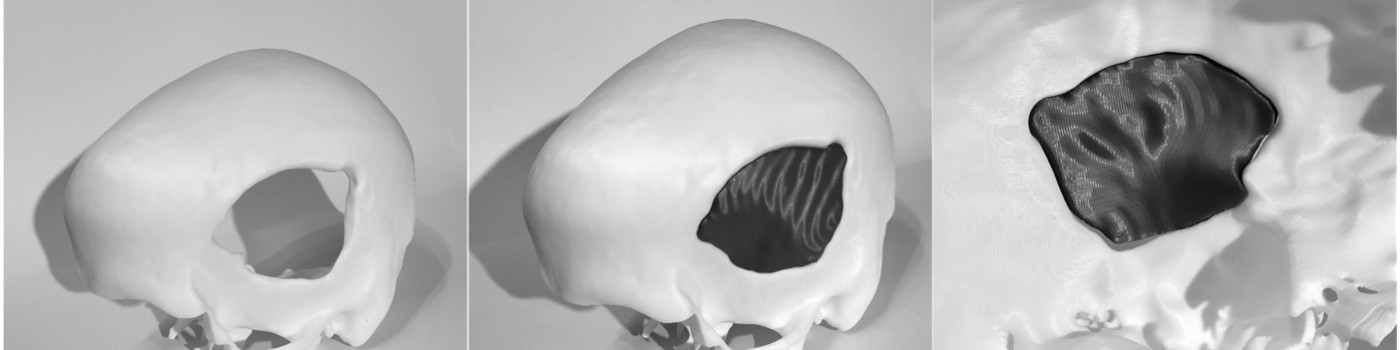
DeepImplant builds fast, automated pipelines that use artificial intelligence to create patient-specific cranial implants. The system automates CAD modeling so implants can be generated in seconds rather than days, removing the need for deep biomechanical expertise from the user. The project combines state-of-the-art deep learning, practical engineering, and mixed reality verification to deliver clinically useful implant designs with unprecedented speed.
Goals
- Automate and dramatically speed up CAD modeling of cranial implants so a user can create personalized implants in just a few seconds without biomechanical expertise.
- Make implant design accessible to clinicians and technicians by wrapping complex modeling inside intuitive AI-driven workflows.
- Provide mixed reality tools that allow users to inspect and verify modeling correctness in 3D before manufacturing.
- Integrate the AI designs with standard medical-manufacturing processes to enable rapid, safe reconstruction surgeries.
Principal Investigator
The project is led by Marek Wodziński, PhD, Assistant Professor at AGH University of Kraków and Senior Researcher at Sano Centre for Computational Personalized Medicine. Dr Wodziński specializes in medical image analysis, computer vision, and deep learning and has led multiple nationally funded initiatives including DeepImplant.
Funding and Hosting
DeepImplant is funded by the National Centre for Research and Development under Lider Grant no: LIDER13/0038/2022 and is hosted at AGH University of Kraków. This support enables the team to turn research prototypes into robust, clinically minded tools and to partner with engineering and medical experts for validation.
Impact and Clinical Relevance
By delivering near-instant, verified implant models, DeepImplant reduces waiting times, cuts cost, and lowers barriers to personalized reconstructive care. The combined AI and mixed reality workflow helps clinicians validate designs quickly, accelerating the path from imaging to implant production and improving outcomes for patients with cranial defects.